
A Luxury Home Without Proper Cabling Isn’t a Luxury Home

It goes without saying that plumbing is planned, electrical is engineered, and HVAC is coordinated early. Everyone understands these systems are essential to how a home functions.

Technology infrastructure deserves the same level of planning. Four out of five Americans say internet services are as important as water or electricity*. Connectivity is now viewed as a utility, and homes must be designed with the same level of planning given to electrical, plumbing, HVAC, and structural systems.

Yet, networking and data cabling are still sometimes treated as flexible…something that can be added later or adjusted during construction. This approach has always been misguided, but it’s even more so in today’s luxury homes, where homeowners expect technology to be planned for and considered, whether they integrate it right away or over time.

Cable Infrastructure, Ready and Waiting

A well-designed home wiring system functions as the home’s nervous system, carrying data, communications, control, audio, video, and security signals with speed and reliability. Like electrical or plumbing systems, it’s foundational infrastructure that supports nearly every connected experience in the home.

In practice, this infrastructure is typically built around structured Cat6A cabling for data networks and Wi-Fi access points, with RG6 coax sometimes included for legacy video systems. In higher-performance or larger-scale homes, fiber optic cable is increasingly used for backbone links, long runs, or future expansion. Speaker wire and low-voltage control cabling are also commonly included depending on the level of automation and distributed audio design.

Just as homeowners don’t pre-plan every outlet location, they expect electrical wiring to already be in place when needed. The same principle applies to data infrastructure: If clients want technology, the backbone should already exist.

This often translates into multiple Cat6A runs per room, dedicated home runs for televisions and media locations, and pre-installed conduit pathways that allow future systems to be added without invasive construction.

Early planning critical. Once framing is complete, adding cable becomes more disruptive, equipment locations are locked in, and coordination with architectural elements is limited. Outdoor coverage, future upgrades, office needs, and evolving technology are far easier, and more cost-effective, to address during prewire.

For this reason, experienced project teams treat structured cabling and conduit planning as essential early-stage infrastructure, alongside electrical and plumbing rough-ins, to preserve flexibility and future options.

Article content
Image by Coastal Source, featuring the company’s 1000 Series Bollard outdoor speakers.

Cabling in the Great Outdoors

Outdoor environments now function as integrated extensions of the home. Pools, terraces, landscape lighting, outdoor entertainment, and security systems require reliable connectivity and thoughtful coordination. It also comes with its own set of considerations. Outdoor network cable needs to be specifically engineered to survive real-world environmental exposure, not just signal transmission. That means a UV-resistant outer jacket for sunlight, moisture protection or water-blocking construction to prevent ingress and internal corrosion, and materials that can handle temperature swings, physical stress, and underground or conduit conditions.

You may need either standard outdoor cable for above-ground runs or more heavily protected direct-burial types with added sealing for soil and water exposure. Just as important is choosing a cable that balances durability with flexibility and manageable diameter, since overly rigid or bulky cable can complicate routing, termination, and long-term reliability.

In practice, these choices typically fall into a few common categories depending on the installation path: outdoor-rated Cat6A for exposed runs, direct-burial gel-filled cable for underground applications where conduit is not used, and conduit-based installations where standard indoor Cat6A is protected inside a physical pathway.

The Wired of Wireless

Structured cabling improves wireless performance by moving bandwidth-heavy systems off the Wi-Fi network. When streaming, surveillance, and entertainment devices are hardwired, they operate more efficiently and leave wireless capacity for devices that actually need it, resulting in stronger, more secure, and more consistent coverage throughout the home.

Hardwired infrastructure also increases system stability and reduces interference compared to relying heavily on wireless connections alone, an advantage that becomes more important in homes supporting remote work, large properties, or multiple simultaneous connected systems.

Even “wireless” systems depend on wiring behind the scenes. Professional-grade and enterprise-grade Wi-Fi access points require Cat6A cabling, typically with PoE (Power over Ethernet). Security cameras perform more reliably when hardwired, and distributed audio and automation systems depend on dedicated low-voltage or network cabling.

The user experience may feel wireless, but performance is built on a wired foundation planned well before move-in.

Article content

Good Infrastructure Is Designed by Good Integrators

Reliable residential networks are the result of planning and coordination. Wi-Fi access point placement, equipment room design, cooling, power management, and integration with architecture all influence how the home performs. When these systems are designed thoughtfully, technology becomes easier to live with and easier to manage.

That outcome typically reflects early collaboration between architects, builders, designers, and qualified home technology integrators who understand that infrastructure is part of the design process.

Many HTA Certified integrators are contacted by homeowners, builders, architects, and interior designers to ‘clean up’ or replace shoddy or low-quality wiring installed by less-than-professional integrators.

Don’t make that mistake… hire a trusted pro from the jump. You can find one in your area using the HTA Directory here.

*Source: Public Knowledge Broadband Access Study


Find an HTA Certified Home Technology Integrator

The Home Technology Association’s mission is to help homeowners and home design & building professionals find the most qualified home technology installation firms for their home construction projects. To find an HTA Certified integrator near you, visit our directory.

If you are enjoying this content, please subscribe to the free HTA Home + Tech Design newsletter using the button at the top of this page for practical guidance on planning technology earlier in luxury residential projects

Extend the Entertainment Beyond Your Walls

Outdoor living spaces have become a natural extension of the modern home, and premium audio plays a key role in creating a complete entertainment experience.

Outdoor speaker solutions from Sonance are engineered to deliver exceptional sound quality while withstanding the challenges of outdoor environments. These systems can be discreetly integrated into landscapes, patios, gardens, and pool areas, providing immersive audio without compromising aesthetics.

Whether hosting guests, enjoying family time, or creating a relaxing outdoor retreat, professionally designed outdoor audio systems bring new life to your exterior spaces.

To learn more about outdoor entertainment solutions, call 301-424-5573.

Next-Generation Home Security with Smart Surveillance Systems

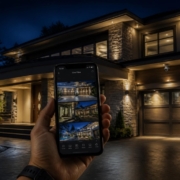
Home security has evolved significantly over the past decade. Traditional surveillance systems have been replaced by intelligent, connected platforms that provide real-time visibility and control.

Solutions like IC Realtime enable homeowners to monitor their property with high-definition and 4K clarity from anywhere in the world. These systems integrate motion detection, smart alerts, and remote access features, allowing users to respond quickly to potential security events.

Beyond recording footage, modern surveillance systems deliver actionable awareness—transforming security from reactive to proactive.

As part of our smart home solutions, we help integrate these systems seamlessly into existing environments for improved safety and convenience.

For more information or consultation, contact us at 301-424-5573.

Dedicated Media Rooms and Screening Rooms

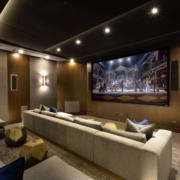
Many of our customers want the best audio/video experience possible. To get the most out of a system, we need to control every aspect of the room to maximize the experience. The best way to do this is with a space designated for a Media Room or Screening Room. Our engineering and attention to detail help deliver a theater experience that surpasses some of the best commercial theaters.

With a traditional TV setup, we install a TV around the constraints of the space. This comes with inherit compromises: glare from natural light, TV mounted high above the fireplace and undesirable audio reflections. With a dedicated theater, the room is designed around the theater setup. The sound system, projection system, room acoustics and seating are all planned cohesively. The space is engineered to minimize audio reflections and gives us maximum control over the light in the room. There are still constraints even with a dedicated theater, such as the size and shape. Thankfully, even these minimal constraints can be more easily mitigated when the room is designed around your theater experience.

When designing a room, our primary goal is to ensure proper seating configurations, correct viewing angles and a fully immersive experience for everyone. Our expertise comes from designing and building hundreds of Media and Screening Rooms our nearly 30 years in business.

Festivities, Family, Friends and Fabulous Media Rooms

Want to say ‘Wow’ every time you watch movies, sports, and games? Then go big. The latest bigger screens allow better detail for large gatherings and a fully immersive experience. Not only does it feel more real, new features like multi-screen viewing for sports are better than ever. Technology improvements make these larger sizes more affordable – we never hear regrets about going bigger, only ‘why didn’t I just go for the 85” in the bedroom too!” Add a soundbar, rear speakers and a subwoofer, and you have a Media Room, for any room. Here are a few points to consider

Immersion: Larger screens fill your field of vision, drawing you into the action like a movie theater.

Detail & Clarity: You can see finer details, player numbers, and special effects more clearly, especially with high-resolution content (4K/8K).

Better for Groups: Everyone in the room gets a great view, perfect for watch parties and family viewing.

Sports Experience: The wide field of action in sports is more engaging and easier to follow.

Gaming: Cinematic video games become more spectacular and immersive.
Reduced Eye Strain: If sized correctly for your room, a larger TV allows you to sit further away, which can decrease eye fatigue.

Sound: Big TV + Surround Sound = Media Room, whether you add a soundbar and subwoofer or a full Atmos system, this is entertainment.

We recommend, sell, conceal wiring, mount, and warranty all styles of video displays and surround sound speaker systems. Want a TV that disappears into a mirror? Just ask. Contact us for a free at-home consultation or to discuss the possibilities for your home at 301-424-5573.

Your Integrator Sells Light Fixtures Now. You Should Know Why

For a long time, lighting lived in a familiar lane.

Architects and interior designers defined the aesthetic. A lighting designer may have been brought in to create a carefully curated, layered lighting design. The builder oversaw the electrician installing the lighting fixtures. And technology integrators arrived later to make everything “work.”

Today, many of the most capable residential technology integrators are no longer just supporting lighting systems; they are actively shaping them. In many cases, they specify architectural-grade fixtures, coordinate lighting control, and integrate shading into a unified system long before construction begins.

This shift has already changed how luxury homes are being built.

Article content
Savant Ascend Lighting Control Keypad

The Rise of IP-Addressable Lighting Systems, not Fixtures

Modern lighting systems now go beyond the product level to the system level. Lighting behaves like part of the home’s operating system, interacting with window treatments and responding to daylight or desired mood, often orchestrated through home automation ‘scenes’ that affect the entire environment at once. The latest lighting system architecture allows individual control over which lights are included in these scenes without an electrician having to rewire a dimmer or switch.

As LED lighting became more capable, with features such as tunable white light, full-color tunable lighting, deep dimming, automatic circadian lighting routines, and scene control, it also became more dependent on design decisions made early in the home-building process.

It’s not enough for a homeowner, designer, or builder to pick out random fixtures and have an electrician hook them up. High-quality lighting relies on compatibility between fixtures, drivers, dimming protocols, control platforms, and the architectural intent of the space.

Article content
Meljac Lighting Control Keypads

Why Integrators Entered the Lighting Conversation

Enter the home technology integrator. Not to replace lighting designers or usurp designers, builders, and architects, but to provide the technology expertise that ensures that what gets specified at design can actually perform as intended once installed and programmed.

In many high-end projects, integrators are now responsible for ensuring that lighting scenes behave consistently across rooms, that shading and daylight are properly coordinated, and that the system remains stable over time with ongoing service years after move-in.

A high-quality lighting fixture can still perform poorly if it is paired with the wrong driver or improperly programmed controls, for example. Conversely, a well-designed lighting system can elevate even simple fixtures into something that feels intentional, layered, and architectural.

Article content
Crestron’s Lne of Designer Lighting Control Keypads

System-level thinking is where integrators increasingly add value, particularly when lighting is tied to shading, automation, security, and whole-home control platforms. As with all home technology decisions, it’s crucial to involve the integrator from the beginning as part of your design team, rather than bringing them in late in the game to make it all work together.

What Designers, Builders & Architects Gain From This Shift

When lighting, shading, and control are treated as a unified system early in the process, the result is reduced client friction as the build nears completion and systems come online. Scenes behave predictably. Daylight and electric light feel balanced, with natural and automated transitions between them. Walls don’t get crowded with unnecessary controls. Luxury fixtures and controls are carefully positioned and artfully executed alongside the design minds on the project. And, perhaps most importantly, the design intent survives the transition from drawing set to built environment.

Article content
Lutron Alisse Lighting Control Keypad

Bring the Integrator In Early

Home technology integrators can be perceived by design-build trades as disruptive. There is a reason for this. Traditionally, home technology integrators are hired so late in the process that every unplanned decision becomes a delay or a rework. Rest assured, this is not the way professional smart home integrators like to work. The key here is early collaboration. Modern lighting, shading, and control systems require coordination at the same stage as architecture, interiors, and MEP systems.

When that happens, lighting stops being a series of isolated choices and becomes part of a unified design language.

Find a complete list of HTA’s lighting resources here.


Find an HTA Certified Home Technology Integrator

The Home Technology Association’s mission is to help homeowners and home design & building professionals find the most qualified home technology installation firms for their home construction projects. To find an HTA Certified integrator near you, visit our directory.

If you are enjoying this content, please subscribe to the free HTA Home + Tech Design newsletter using the button at the top of this page for practical guidance on planning technology earlier in luxury residential projects
Control4’s Sensational New Upgrade; It’s Like Getting A Whole New System!

Years in the making, Control4 recently released X4, their latest operating system, and it was worth the wait. X4 brings a stunning, refreshed interface with enhanced functions like customizable routines, better Apple integration including with CarPlay and improved Intercom Anywhere. Let’s take a look at these one by one.

A New User Interface: X4 provides a cleaner and streamlined interface for touchscreens, mobile apps, and remotes.

Personalized Home Views: You can now organize rooms and controls exactly how you want them — faster access, fewer taps. Want a screen with just your shades and climate controls for the primary bedroom suite? You got it.
Enhanced Apple Integration: Deeper integration with Apple devices, including iPhones, Macs, Apple CarPlay, and Siri.

Improved Ecosystem Support: The new OS provides better integration with energy management tools, surveillance systems, and garage controls, plus improved camera feeds.

Intercom Anywhere 2.0: Enhanced video intercom and push notifications make X4 a better fit for busy households and smart security setups.
Future-Proofing: X4 is built to support new C4 controllers, new drivers, and other upcoming platform evolutions, ensuring your system stays current.

Major platform upgrades come out only once or twice a decade. Get a new system without changing your system – in time for the holidays! Contact us today at 301-424-5573

Our New Performance Plans

Join now to save on your next equipment upgrade

We can now take care of your system remotely. Updates, servicing, and maintenance – it’s all possible without having to schedule a visit for most incidents. Our top plans feature dozens of benefits that cover just about anything with a fixed monthly payment. Plan members get 10% off system equipment upgrades (video products excluded) and we waive our usual trip charges for on-site service calls. Click here to check out our new Performance Plans – our best services and fastest responses are for plan members only. Performance Plans start at only $80/month.